
Frankfort Previous-Resident Sources
Previous residents of a Frankfort address appear in separate legal, physical, and human records. Start with the parcel and deed for the property interest, then use a dated directory, census, newspaper, obituary, or local-history file for occupancy. The sources do not form one unbroken roll, so each entry needs a date and a role such as grantor, grantee, assessed owner, subscriber, occupant, or historical subject.
| Source | Years It Covers | Where Held | What It Shows |
|---|---|---|---|
| Recorder working index | About 1965 to current | Will County Recorder online and office | Recorded parties, dates, PIN, legal description, document references |
| Older deeds and plats | Plats back to 1836; coverage varies | Recorder archive, books, microfilm, IRAD | Earlier conveyances, subdivisions, block and lot |
| Telephone and directory leads | 1924 local telephone volume; 1902 finding-aid lead | Frankfort Library and external collection | Listed subscribers or households, not a complete run |
| 1926 Sanborn map | October 1926 snapshot | University of Illinois digital collection | Structures, uses, block and house numbers |
| Local archives | Varies by collection | Library and Historical Society | Census, cemetery, funeral, home, newspaper, photo, and oral-history clues |
For a recent transfer, begin online. For a date before the working index, move to the Recorder archive and IRAD’s Will County holdings search. For the people tied to a house, consult the Frankfort Library and Frankfort Area Historical Society. No reviewed source supports a complete year-by-year local directory run.
Start a Frankfort Address Timeline
Normalize the street address in the County SOA search, then obtain its property index number, or PIN. Frankfort Township parcels commonly begin 19-09. Keep both the formatted Recorder form and the undashed GIS form. A PIN is safer than a street label when a parcel has split, a suffix has changed, or a postal city differs from the legal municipality.
The Frankfort Township Assessor search accepts parcel number, street number, direction, street name, and city. Assessment data is a lead, not title proof. Record its valuation date and verify the current interest in the deed itself.
Trace Will County Deeds Backward
The Will County deed chain follows documents, not guesses about who lived there. Find the newest deed by PIN, address, recording number, or grantee. Read the legal description and prior grantor from the instrument, then search that prior party and the same land description in an earlier date range.
- Copy the normalized address, PIN, and current assessment name.
- Find the latest deed and inspect its recording date, document type, parties, and legal description.
- Search the grantor as an earlier grantee, keeping the land description constant.
- Repeat until the online index reaches its usual limit near 1965.
- Continue with archive indexes, books, plats, microfilm, or a specific office request.
- Grantor and grantee
- The grantor transfers an interest; the grantee receives it.
- Chain of title
- The linked series of recorded transfers affecting the same land.
- Legal description
- The formal land description in the deed. It can remain useful when a street name or number changes.
A mortgage, release, life estate, trust deed, probate filing, or tax document plays a different role from a sale deed. Never flatten all named parties into previous residents. Confirm the instrument, date, and legal description first.
Frankfort Deed Search Channels
The Recorder’s search options include free Direct Search, paid Tapestry, subscription Laredo, and office archive resources. Direct Search provides name, date, document type, address, ZIP, and PIN criteria. Tapestry adds grantor/grantee and legal-description searching. The online index is a working index and may lag recording by several days.
The Recorder’s ways-to-search page is shown below with the available access paths.
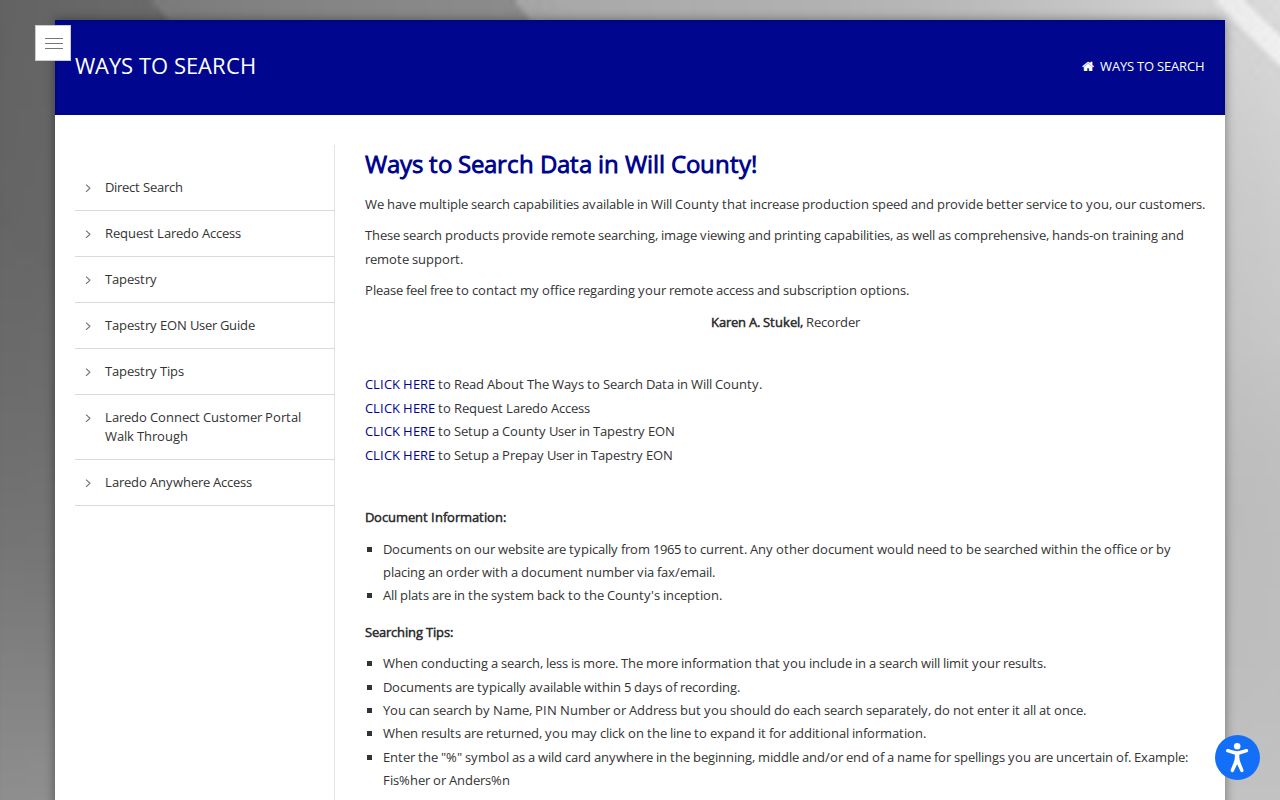
The page helps choose between an online index and an archive search when the address trail moves into older records.
When the portal is not enough, visit the Recorder’s public workstations, request a copy by phone, email, fax, or mail, or ask for a specific nonexempt record. Archive staff can direct a search into microfilm, historical indexes, books, plat books, and maps. The posted fee schedule is effective October 1, 2025 and should be checked again before payment.
The current Recorder fee page is captured below because copy and search charges can change.
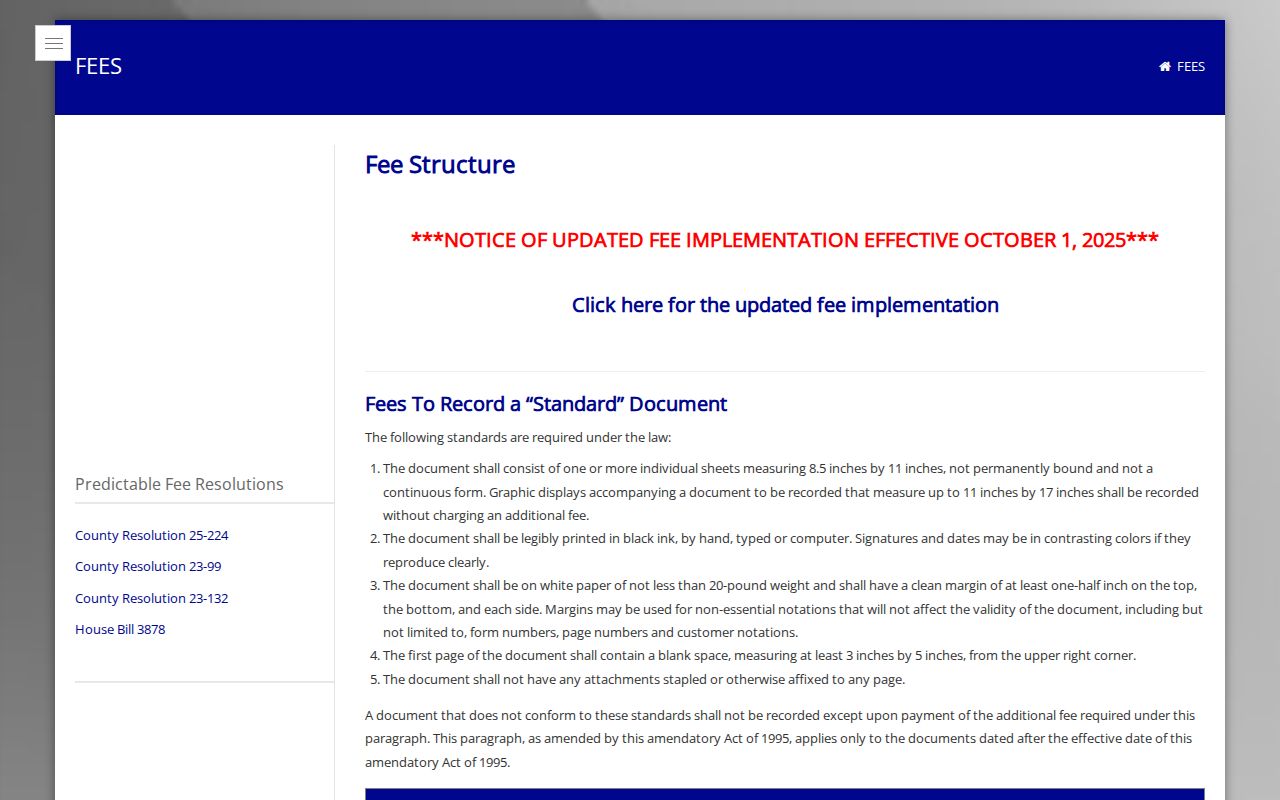
Verify the live schedule before ordering an image or certified copy.
The Will County Recorder landing page shown below identifies the office that holds the recorded chain.
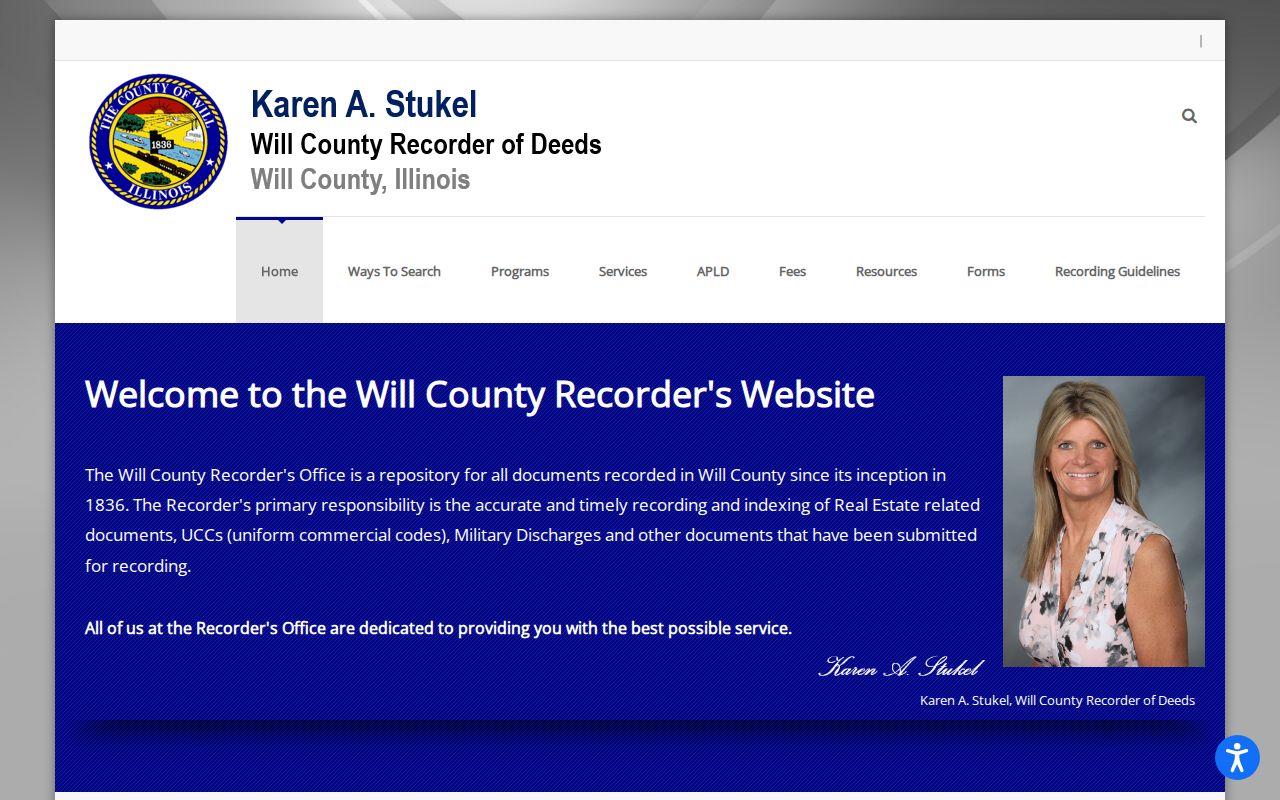
Use the Recorder for land instruments and certified copies. Use local archives for the separate question of who occupied a Frankfort house.
Frankfort Records Before 1965
Previous-resident research does not end at the online cutoff. Will County records begin in 1836, and the Recorder says plats extend to that year. Older deeds, mortgages, tax records, probate files, and township material may also appear through IRAD and the State Archives, depending on the series and date.
Bring the last known book/page, party name, legal description, subdivision, block, lot, and PIN to the archive. Search dates in a narrow span first. If names change or a parcel was divided, follow the plat and legal description before trying the modern street address again.
Map a 1926 Frankfort House
The October 1926 Sanborn map contains two sheets with buildings, uses, block or house numbers, boundaries, and infrastructure. It can show whether a structure existed and how it was depicted at that date. It cannot name every resident or prove present-day parcel identity.
Compare the Sanborn sheet with the historic plat, Village historic survey, zoning material, Recorder description, and modern GIS. Downtown sites near the railroad and Olde Town can be especially sensitive to old place labels and changed footprints. Document each match and each uncertainty.
Link Frankfort Past Households
Ownership is only one layer. The Library confirms a 1924 telephone directory, and a finding aid points to a 1902 Frankfort city directory, but a complete run was not located. Use the Frankfort city directory collections with census, newspapers, obituary records, cemetery files, and family histories. A listed subscriber or obituary address is dated evidence, not a permanent residence claim.
Build the occupancy chain as a flow: directory or telephone listing, then the nearest census year, then newspaper or obituary evidence, then probate or cemetery material where relevant. The Library obituary index covers several local papers unevenly, so a failed name search may reflect a gap in that title and year rather than absence.
Lawful use. Research previous residents for house history, family history, or another lawful personal purpose. Never use an address trail to track, threaten, or harass a living person.
Three Layers of Frankfort History
A sound house history joins three types of proof. The legal layer uses deeds, a PIN, and a legal description. The physical layer uses the 1926 Sanborn map, plats, photographs, surveys, zoning, and preservation files. The human layer uses directories, census entries, newspapers, obituaries, school files, and oral histories.
No layer can stand in for the other two. A deed may show a legal interest without proving occupancy. A map may show a structure without naming a household. A directory can list a person without proving title. Keeping these roles separate makes the previous-resident timeline both more accurate and more useful.
Note: Record gaps should remain visible; do not bridge an unknown year with an undated name match.
Build a Frankfort Resident Timeline
Use one row for each dated source. Record the address exactly as printed, a normalized address, PIN or legal description, person or entity, role, municipality, township, county, record number, source date, and confidence. Add a privacy note when the person may still be living. This structure prevents a loose name match from becoming an unsupported claim about previous residents.
A timeline may contain a grantee, assessed owner, permit applicant, business occupant, directory subscriber, obituary subject, and modern mailing contact. Those labels are intentionally different. A gap can result from a missing directory, a pre-1965 deed that is not indexed online, a parcel split, changed numbering, or a closed record. State the gap rather than guessing.
Frankfort’s historical geography also needs care. A source may say Frankfort Station, Chelsea, the Township, or a nearby place. The railroad and settlement chronology predate Village incorporation. Use the 1855 plat, later atlases, Recorder land records, and a mapped landmark to connect the old place label to present land.
Frankfort Archives Add Residents
The Frankfort Library archives hold telephone directories, township maps, aerial photographs, cemetery sources, scrapbooks, newsletters, and material on local homes and businesses. Staff can help frame a request when only an address, surname, or rough date is known. Access may be in person even when a catalog description appears online.
The Frankfort Area Historical Society collections add family histories, census copies, plat maps, school and cemetery records, funeral records, photographs, military lists, village minutes, newspapers, interviews, obituaries, and house histories. These sources can place people around a structure, but the citation must identify whether the item is a photograph caption, oral account, newspaper notice, or compiled family file.
Pair archival evidence with the legal and physical layers. A home file may name a builder or family; the deed establishes the land interest; a map dates the structure. Together they can support a strong account of past residents without pretending that any one collection is complete.