
Frankfort Directory Holdings
Frankfort does not have a verified, unbroken directory run. The strongest confirmed local item is a 1924 telephone directory in the Frankfort Public Library District archives. A separate finding aid identifies a 1902 Frankfort volume within a broader U.S. City Directories collection, but its scan was not available during research. That gap is important. It means a search should move among the library, the Historical Society, online finding aids, and archival sources instead of assuming that every year was printed or preserved.
| Collection | Years | Where Held | Access |
|---|---|---|---|
| Frankfort telephone directory | 1924 | Frankfort Public Library archives | Ask library staff about viewing and copying |
| Frankfort finding-aid entry | 1902 | U.S. City Directories collection lead | Finding aid online; image access not confirmed |
| Local newspapers and obituary index | Runs vary by title | Frankfort Public Library | Index online; archive help available |
| Family, census, school, funeral, and village files | Various years | Frankfort Area Historical Society | Contact the Society for access |
No reviewed source established a last printed year, a publisher sequence, or complete criss-cross run. Searchers should state the year and type of item actually viewed. A telephone book lists subscribers, not every resident. A printed volume may mix household, business, and resident entries. For years with no volume, use the census, local papers, cemetery files, plats, and property records as separate forms of evidence.
Frankfort Directory Archive Routes
The Frankfort Library archives are the main local access route. The holdings include telephone-directory material, township maps, aerial photographs, cemetery files, scrapbooks, newsletters, and sources on homes and businesses. Library staff can also point researchers toward Ancestry and FamilySearch access. These companion sources help when a city directory year is absent or when a listed name needs context.
The library is at 21119 S Pfeiffer Road and can be reached at 815-469-2423. Ask about the exact item, year, format, and copying rules before visiting. If the library cannot locate a volume, contact the Frankfort Area Historical Society, then check the Illinois Regional Archives Depository holdings for Will County. Older county books and plats may also require the Recorder's archive or microfilm.
The library local-history page shows the research setting and key town dates.
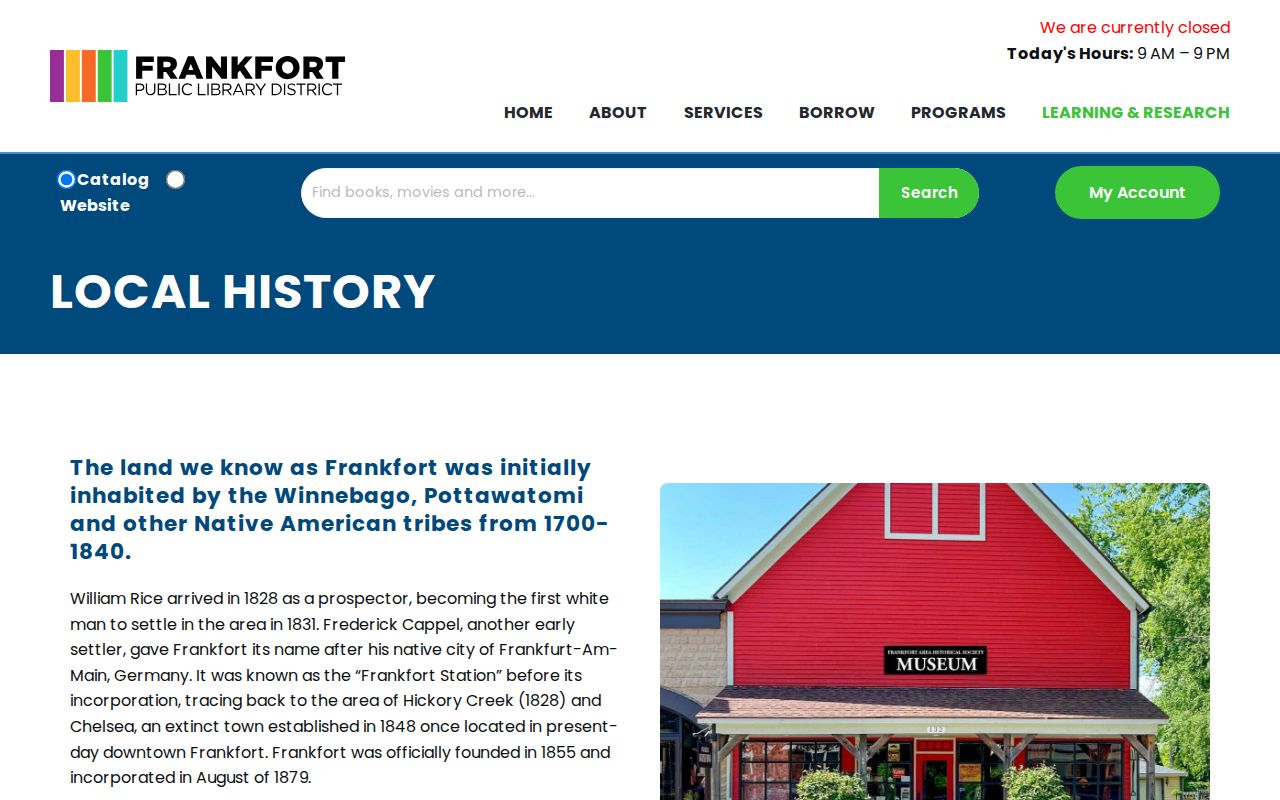
The captured page provides a local chronology that helps identify the right place name before searching an old volume.
The Frankfort Library archives page identifies the local formats available for a city directory search.
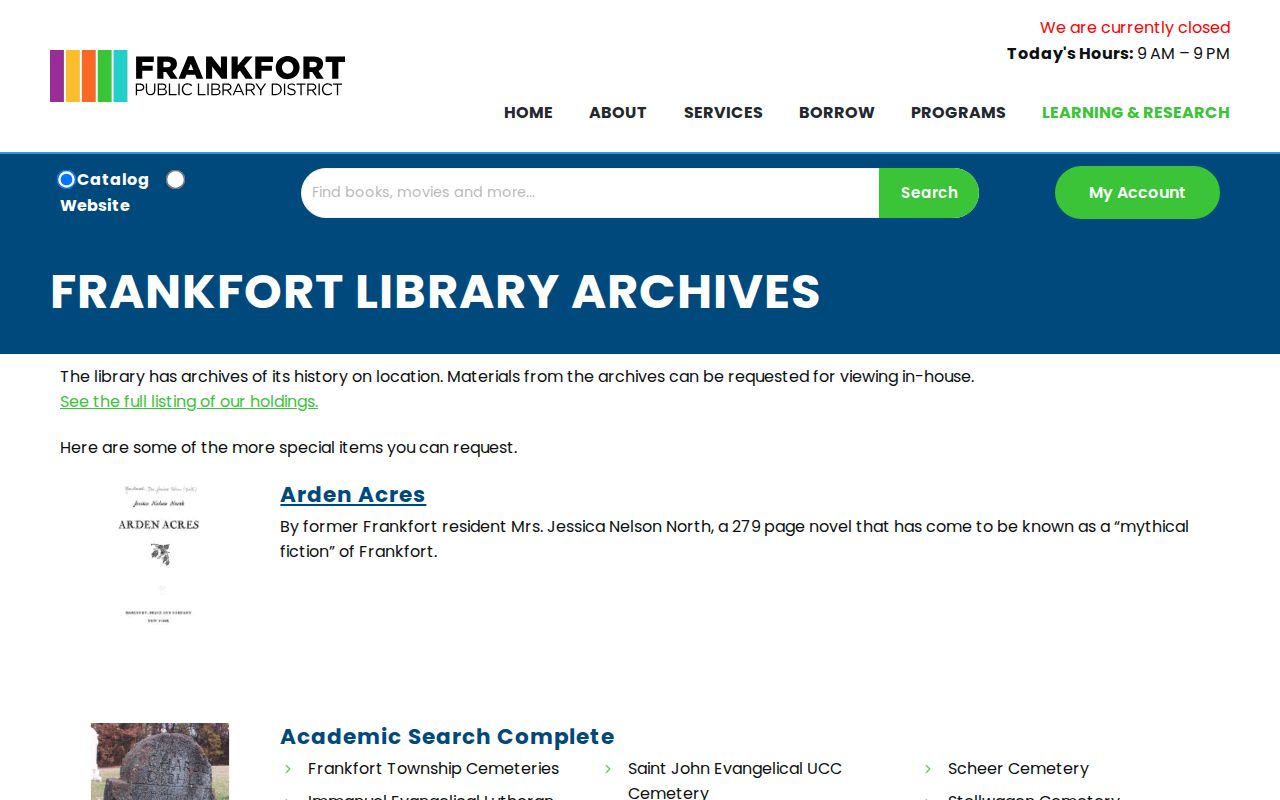
The archive inventory points researchers toward telephone books, maps, cemetery material, scrapbooks, and staff help when a directory year is missing.
Frankfort's Directory Record Gap
The 1924 telephone book is the earliest directory-like local item confirmed by the library. The 1902 city directory is only a finding-aid lead. A complete set and direct scans were not located. This is useful evidence, not a reason to fill missing years with unsourced names. It tells the researcher which channels remain: in-library databases, archive staff, Historical Society collections, the State Archives, and IRAD.
The Will County directory finding aid records the 1902 lead.
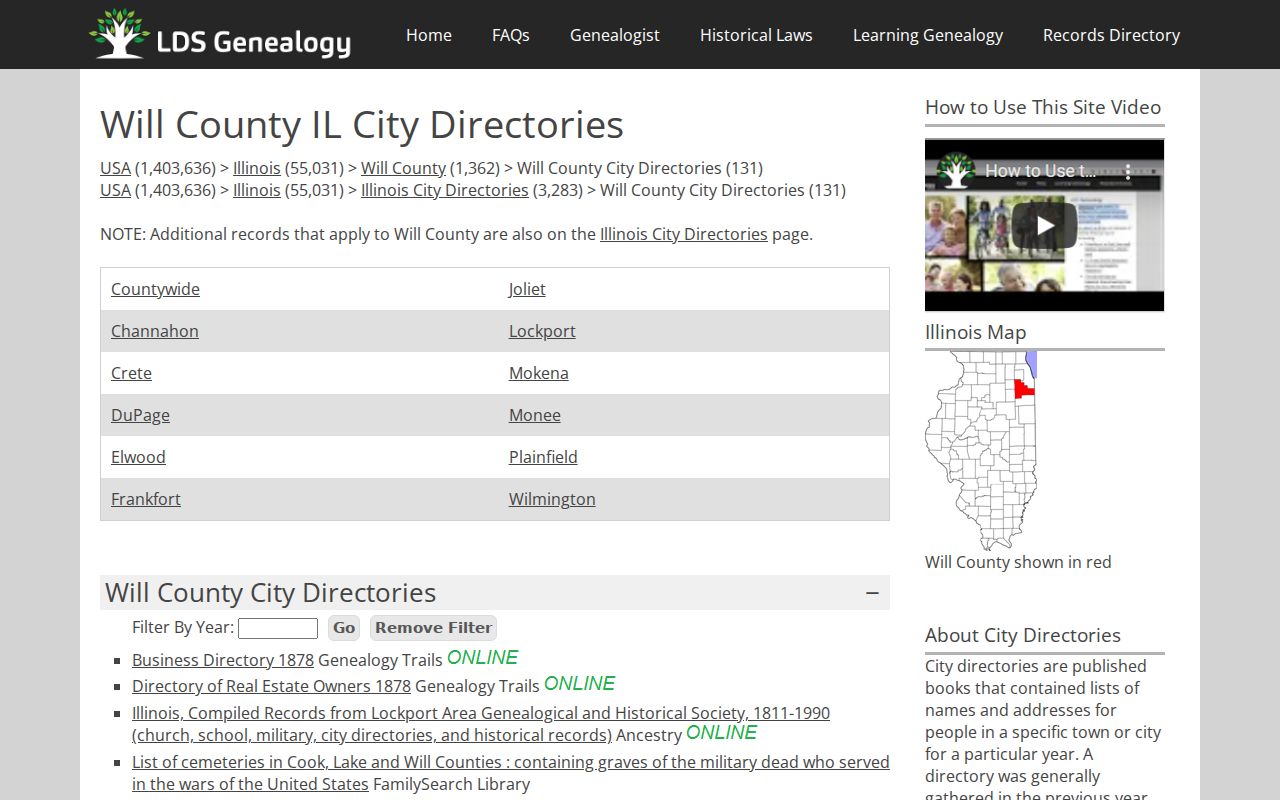
The screenshot is a collection pointer, not proof that a named person appears in the volume.
Frankfort Directory Timeline Clues
Place names changed before the known directory years. Local history places early settlement in the 1828 to 1831 period, Chelsea in the present downtown area in 1848, the railroad and Frankfort Station in the mid-1850s, and village incorporation in 1879. A person may therefore appear under a station, township, farm, or county label rather than under the modern village name.
| 1836 | Will County was organized, starting the Recorder's stated county record span. |
|---|---|
| 1855 | Sherman Bowen's town plat and the railroad era shaped later address research. |
| 1879 | Frankfort incorporated as a village. |
| 1902 | A finding aid lists a Frankfort city directory. |
| 1924 | The earliest locally confirmed telephone directory. |
| 1926 | A two-sheet Sanborn map fixed a building and block snapshot. |
Use each date as a search fork. The village record, township source, and county archive may describe the same family or place in different terms.
Read Frankfort Directory Entries
Read the title page and abbreviation key before copying a name. The available research did not expose a sample Frankfort entry, so no local abbreviation should be invented. In a typical directory, an entry may distinguish a subscriber, householder, business, spouse, occupation, or street address. Those roles are not interchangeable. Record the printed form exactly, including initials and spelling, then note the volume title, year, page, and entry category.
| Printed name | Keep initials, spelling, and order as shown. |
|---|---|
| Entry role | Identify subscriber, householder, business, or other stated category. |
| Address | Copy the house number and street wording without modernizing it. |
| Work or trade | Record only what the entry states and note any short form. |
| Related name | A spouse or other person may be listed, depending on the volume. |
- Criss-cross directory
- A directory arranged by street and house number instead of only by surname.
- Householder index
- A list keyed to the person identified as the main household entry.
- Abbreviation key
- The volume's own guide to short forms. It controls how marks in that book should be read.
A listed address is evidence for that source and date. It does not prove legal title or every person who lived there. Compare it with a census page, deed, newspaper item, or other record before drawing a firm conclusion.
Map Frankfort Directory Addresses
The University of Illinois digital collection provides Frankfort's October 1926 Sanborn map. Its two sheets show structures, occupancy or use, boundaries, and house or block numbers. That makes it a strong companion to a 1924 telephone listing or a later newspaper address.
The map can confirm the physical setting at one date, but it does not name every resident or establish ownership.
Confirm Frankfort Directory Names
The library's obituary index can explain why a person disappears from later sources. Coverage differs by newspaper and year. The Frankfort Times run is complete from June 1953 through October 1968, while other titles include complete, spotty, and in-progress stretches. An absent result may reflect a coverage gap rather than the absence of an obituary.
The Frankfort obituary index accepts names, dates, and text terms.
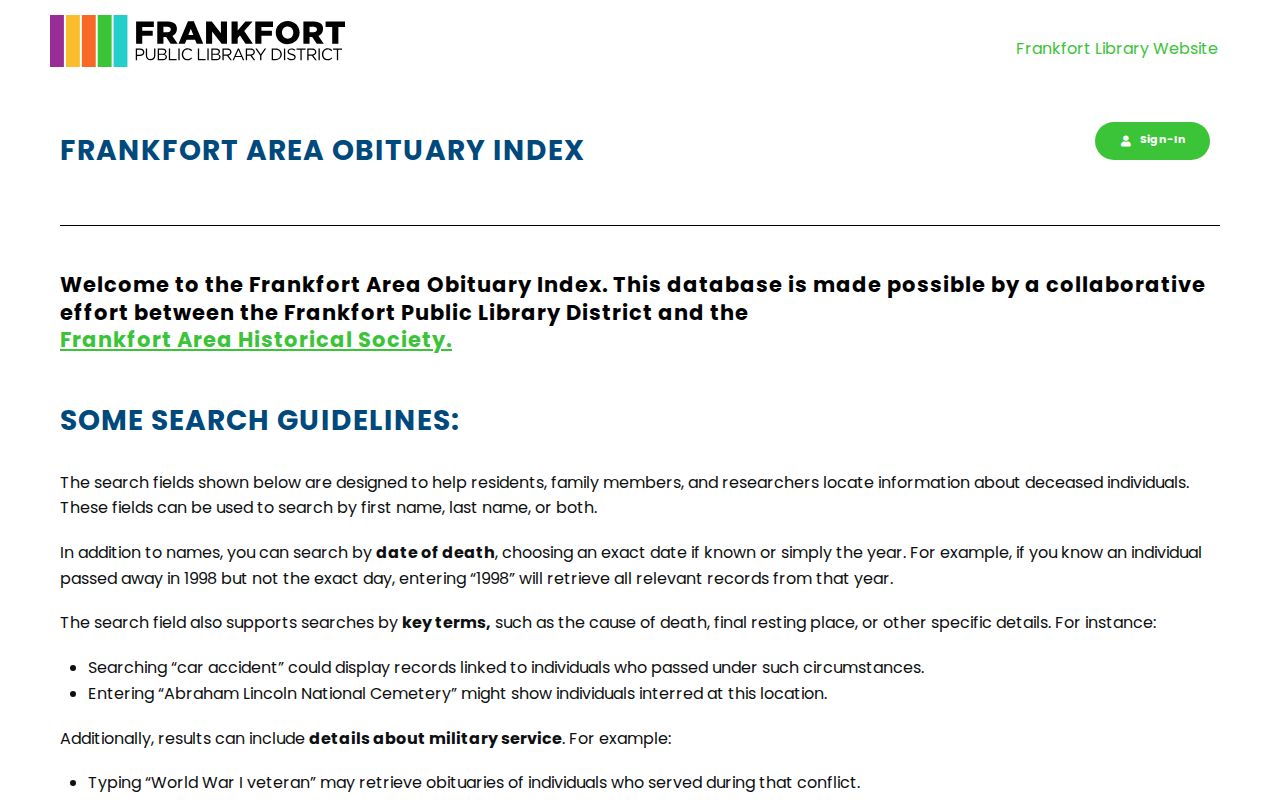
Use the hit as a newspaper lead, then compare the notice with cemetery, probate, census, or official death material.
Frankfort Historical Directory Sources
The Frankfort Area Historical Society holds family histories, census copies, plats, school and cemetery records, funeral files, photographs, military lists, home and business histories, village minutes, newspapers, oral interviews, and an obituary index. These sources can supply context missing from a short printed entry. The museum is at 132 W Kansas Street and lists 815-469-6541.
Ask for a surname, street, building, school, church, or narrow year span. State whether the goal is to identify a family relationship, trace a move, or learn how a building was used. A focused request lets staff choose among many types of material without treating one index as a complete resident roll.
Trace Frankfort City Directory Families
A family trail works best when each source answers one narrow question. Start with the exact volume citation, then follow the name across nearby years if those books exist. Use census schedules for decade snapshots. Add local newspapers, cemetery files, and the Historical Society's family materials to test relationships. If the address changes, compare the old number or block with maps and plats before assuming the family moved.
- Copy the first entry exactly, with year, page, role, and address.
- Check the prior and next available volumes for spelling and address changes.
- Pair the entry with the nearest census year, but keep each source's date distinct.
- Use the Sanborn map, plats, and aerials to reconcile an old street or building.
- Close the trail with newspapers, an obituary, cemetery records, probate, or a deed when needed.
A missing name has several possible causes. The person may have moved, died, changed names, lived outside the publisher's boundary, lacked a telephone subscription, or simply been omitted. Frankfort's incomplete run makes that caution vital. Do not assign a cause until another dated source supports it.
For a modern address search, use the Frankfort street directory rather than treating an old listing as current.