
Find Frankfort Residents Carefully
A good Frankfort residents directory search begins with the fact already known. An address belongs first in the Frankfort Township Assessor or Will County Supervisor of Assessments search. A person tied to a recorded land filing belongs in the Will County Recorder index. A voter can confirm only their own registration through the Illinois lookup. A historical name may require the Frankfort Public Library District, the Frankfort Area Historical Society, or the Illinois Regional Archives Depository system. Each source records a different role at a different time.
Do not turn one match into a claim of current residence. The assessed owner may receive mail elsewhere. A deed may name a trust or estate. A permit can identify an applicant or contractor, while a directory lists a subscriber for one edition. Match the address, date, middle initial, parcel number, or document number across two sources. Stop when the available records cannot support a firmer conclusion.
- Check an address or owner name in the township or county assessment search, and save the result date and PIN.
- Use an official Illinois voter confirmation only when the required personal details and a lawful purpose are present.
- Search the Recorder by name, PIN, address, or book and page, then read the instrument before assigning a role.
- For an older lead, ask the library or Historical Society for the closest directory, map, newspaper, or cemetery source.
- When the online coverage ends, contact the custodian, visit its archive, or submit a narrow Illinois FOIA request.
Frankfort Directory Custodians
Frankfort records cross several jurisdictions. The Village keeps municipal files such as permits, code matters, meetings, and annexations. Frankfort Township maintains source assessment data for its parcels. Will County keeps recorded instruments, county assessment routes, court files, election records, and vital records. The Illinois offices add voter confirmation, archives, and restricted vital-record access. For a whole-road method, use the Frankfort street directory. These three offices answer the most common current-record questions.
Will County Recorder of Deeds
158 N Scott Street
Joliet, IL 60432
815-740-4637
Frankfort Township Assessor
Frankfort Township
Frankfort, IL 60423
County SOA: 815-740-4648
Will County Election Authority
302 N Chicago Street
Joliet, IL 60432
815-740-4620
Frankfort Jurisdictions Change Results
A Frankfort mailing address does not by itself prove that a parcel sits inside the incorporated Village. Frankfort Township is a separate unit of local government, and some unincorporated addresses use the same postal city. Village boundary documents can also refer to Will and Cook county contexts. Choose the office by the record's legal geography, not merely by the city printed on an envelope.
Start with USPS for the postal form, then use the county parcel and municipal layers for place. A Village permit belongs with Frankfort. An assessment record belongs with the township assessor. A deed for a Will County parcel belongs with the Will County Recorder. This small check prevents missed records and false links between people who share a street or postal name.
Search Frankfort Property Fields
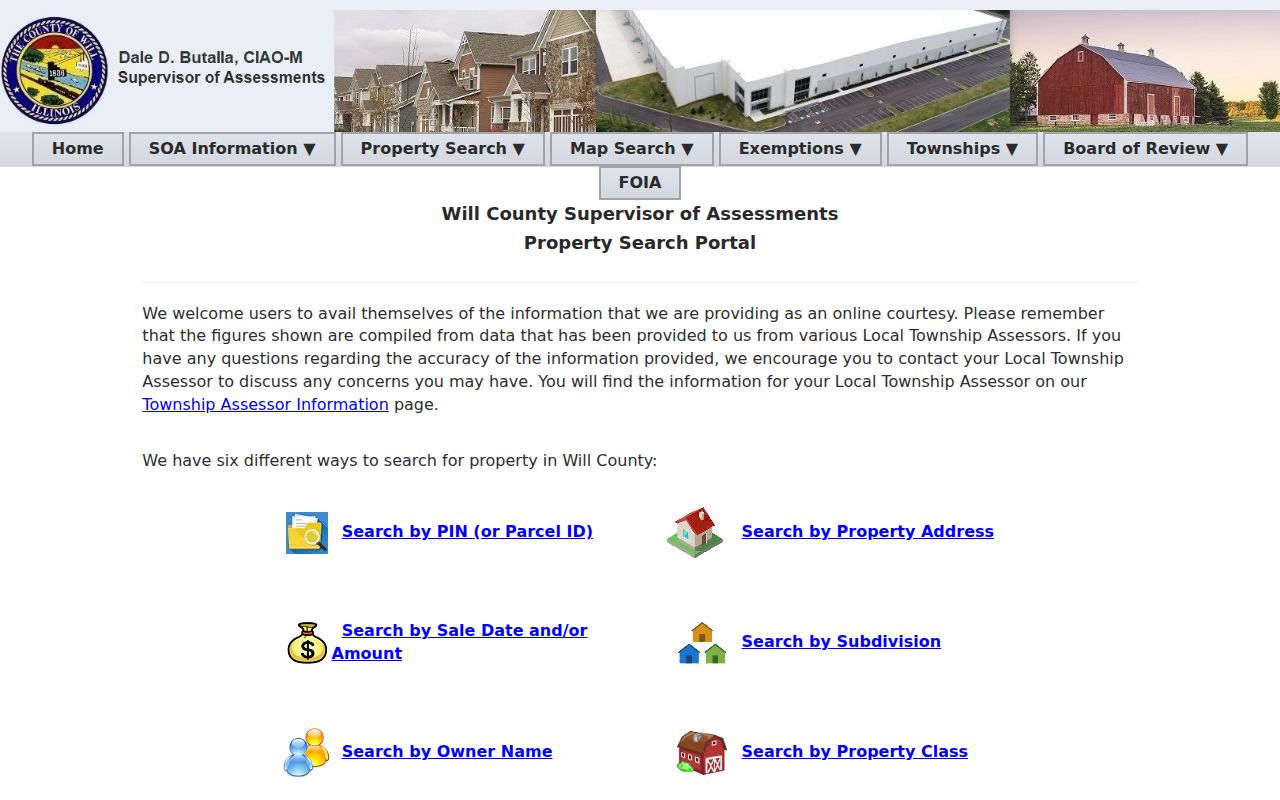
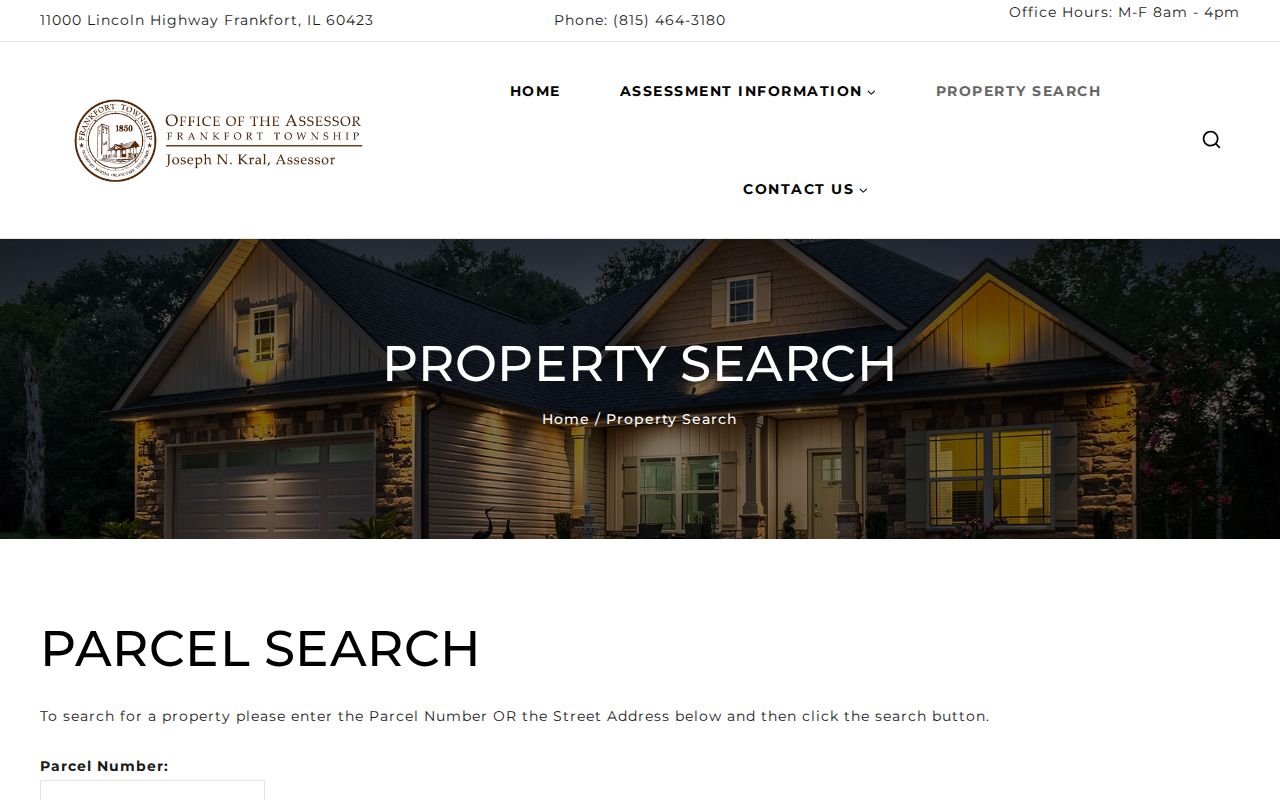
The township and county property systems are often the quickest route from a Frankfort address to a parcel identifier. The township form can be widened with fewer characters. County search options add owner name, subdivision, sale details, and property class. Assessment data is useful evidence, but the township warns that it is not proof of ownership or market value.
| Frankfort search field | Input | Use |
|---|---|---|
| Parcel Number | Full or partial PIN | Connect assessment, GIS, and deed research |
| Street Number | House number | Narrow one site on a road |
| Direction | Street prefix | Separate similar address forms |
| Street Name | Full or shortened text | Browse likely address matches |
| City | Municipal or mailing city | Refine, but not prove, jurisdiction |
The Will County property portal presents six routes. The captured portal illustrates why an address, PIN, and owner name should be treated as separate ways into the same assessment system.
The more local Frankfort Township property search separates the street direction, name, and city while also accepting a parcel number.
Recorder Indexes Frankfort Filings
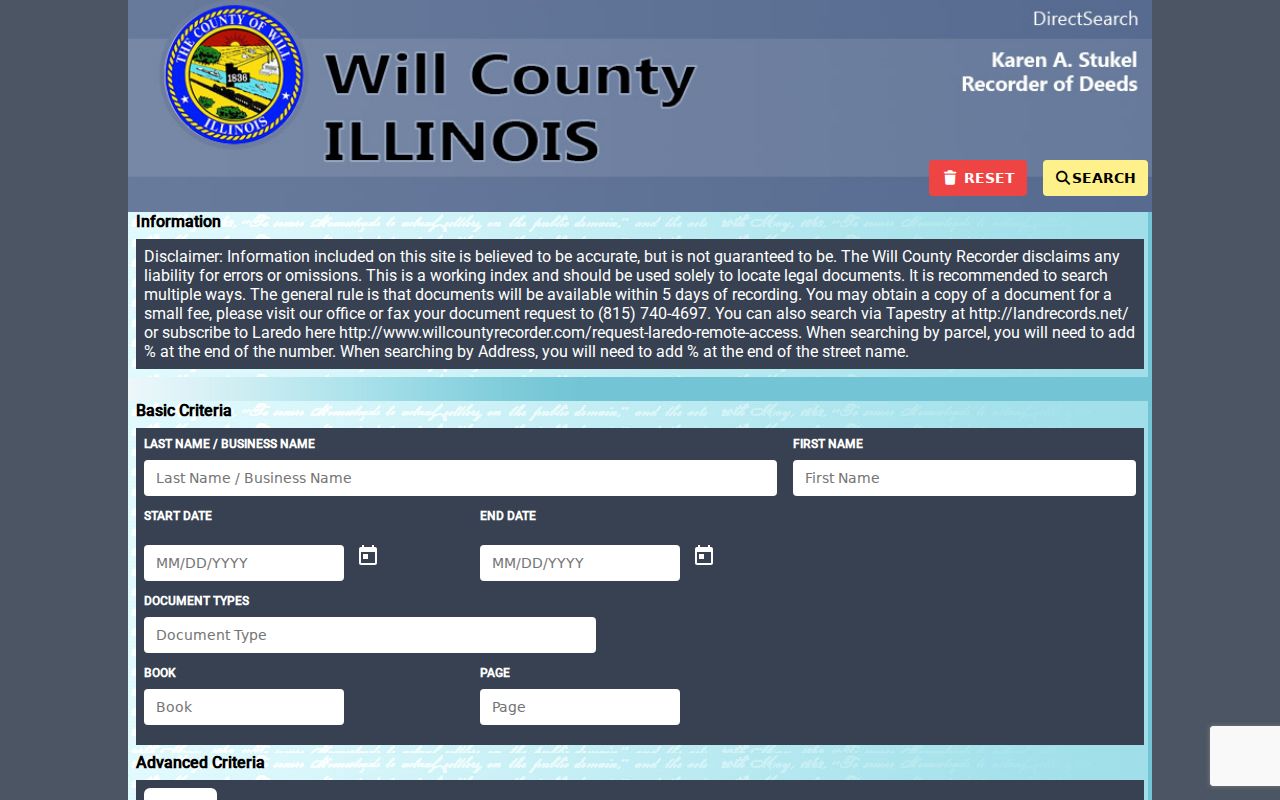
The Will County Recorder keeps deeds, mortgages, liens, releases, plats, and other instruments from the county's beginning in 1836. Its online working index generally covers 1965 forward. Direct Search accepts party names and dates, while advanced criteria add house number, street, city, ZIP, and PIN. Tapestry offers paid document searching, and Laredo is a subscription route. The Recorder also supports its Joliet counter, public workstations, archive, microfilm, historical indexes, phone, fax, email document requests, and FOIA.
Use the Will County Recorder deed index to locate a filing, then inspect its document type, recording date, legal description, and parties.
- Index
- A tool that points to a record, not the full record itself.
- Parcel
- A mapped tract of land tied to a property identification number.
- Roll
- An official list created for a set purpose, such as assessment.
- Criss-cross directory
- A directory arranged by street or telephone number rather than surname.
Current Frankfort Directory Sources
No official source lists every person living in Frankfort. Instead, current public records identify owners, parties, registered voters, applicants, and other defined roles. A reliable residents directory preserves those labels and the record date. Use the narrowest official source that answers the question, then seek a second source if identity matters.
| Source | Who It Lists | Keeper | Access |
|---|---|---|---|
| Assessment roll | Assessed owner and parcel | Township assessor | Free online and office contact |
| Voter confirmation | One eligible voter's status | Illinois and Will County | Required personal fields |
| Recorded-instrument index | Parties to land filings | County Recorder | Free and paid routes |
| Village BS&A records | Named roles on municipal files | Village of Frankfort | Online portal or FOIA |
| Court party search | Parties and case events | Circuit Clerk | Limited free lookup and clerk copies |
Commercial people-finder data may merge old addresses, names, and phones without showing a dependable source date. Official rolls are narrower but disclose the custodian, role, and correction route. Free index access often answers whether a record exists. Paid access is justified only when the actual image or certified copy is needed.
Village Records Name Frankfort Roles
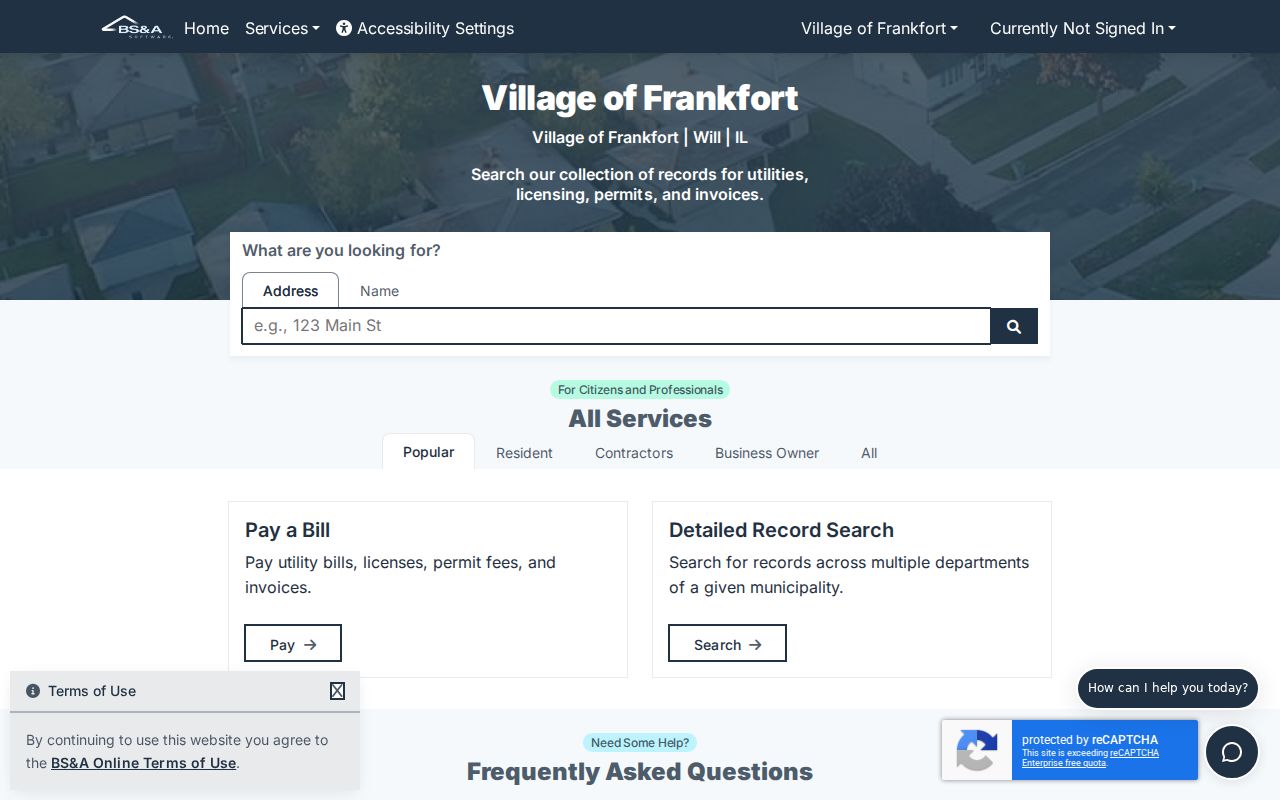
Village records cover permits, zoning, code matters, business licenses, utilities, meetings, and annexations. The BS&A municipal portal permits searches by address, name, parcel number, and detailed record categories. A hit may identify an owner, applicant, contractor, licensee, or account-related role. It should not be relabeled as a resident.
The Village of Frankfort municipal records portal is the direct online entry point.
If a record is absent, submit a focused Village FOIA request describing the address, department, record type, and date range. The available form supports inspection or copies and paper or electronic delivery. Its old revision date makes a quick check of current submission details wise.
Frankfort Voter Confirmation Limits
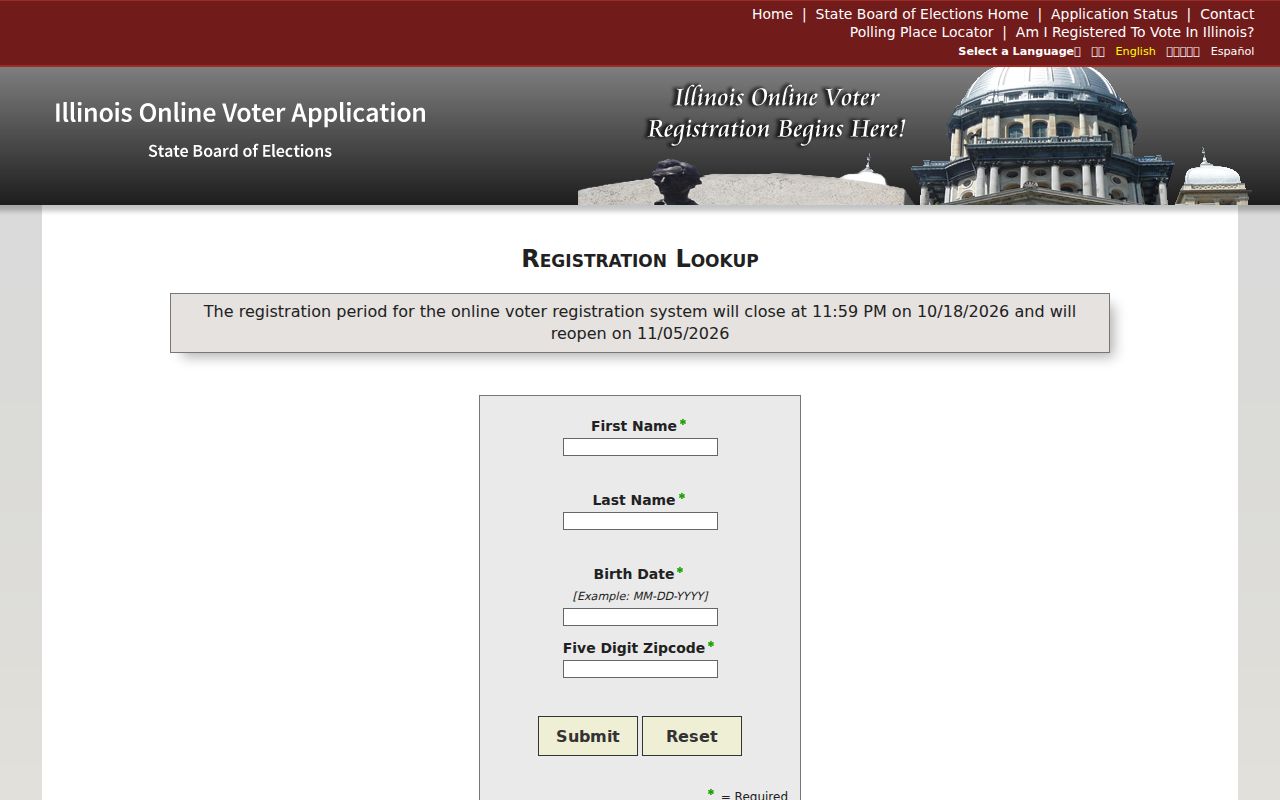
The Illinois Online Voter Registration Lookup asks for first name, last name, birth date, and a five-digit ZIP. It confirms registration for a supplied person; it is not a public browseable roll of Frankfort households. The Will County Election Authority also supports phone and in-person registration help. Political-list requests and election-law inquiries follow separate legal rules.
Open the Illinois voter registration lookup only when all required inputs are known.
Frankfort Court Names Need Context
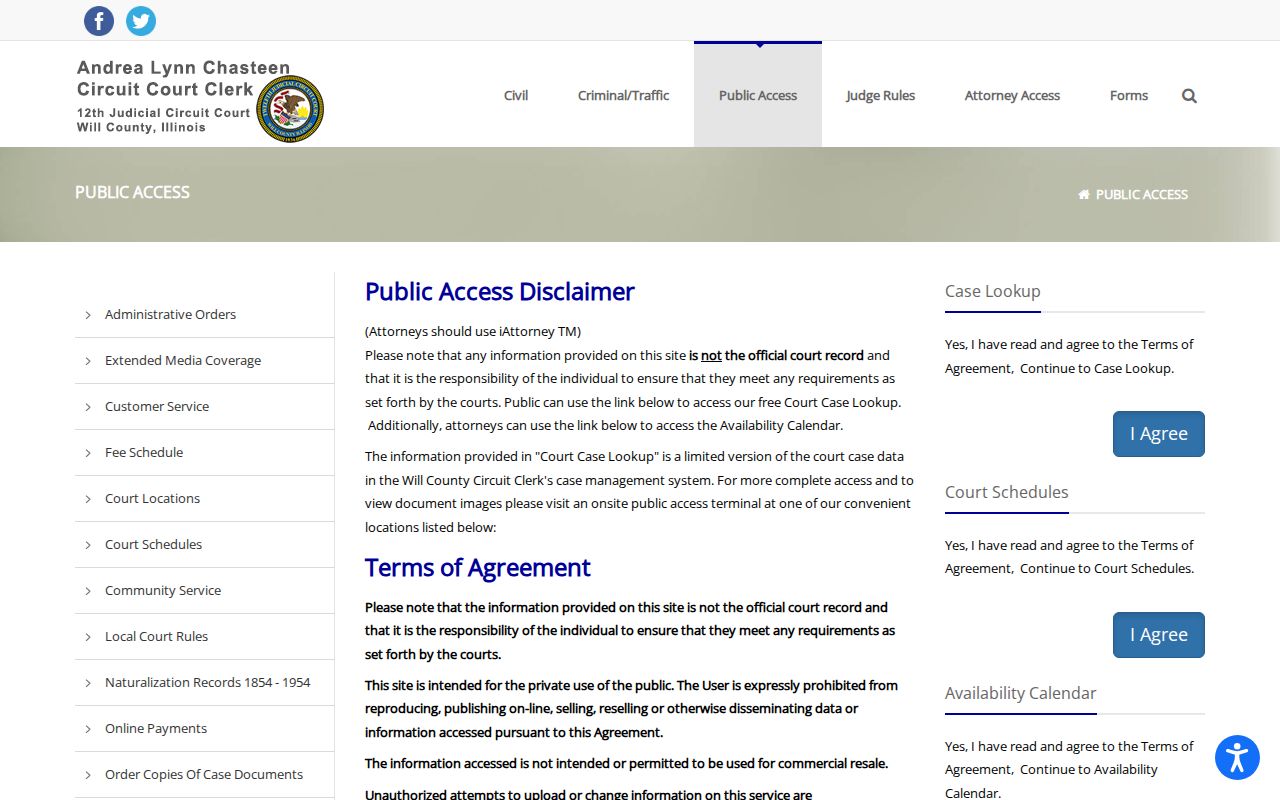
The Will County Circuit Clerk offers a limited case lookup and public schedules. A schedule can show party, case or ticket number, date, time, courtroom, and category, but it is not a complete docket. The courthouse terminal, archive appointment, mail or in-person copy request, and clerk file procedures provide fuller access. Federal matters use PACER rather than the county system.
Visit the Will County case-search start page and accept its access limits before searching.
Frankfort Vital Records Stay Restricted
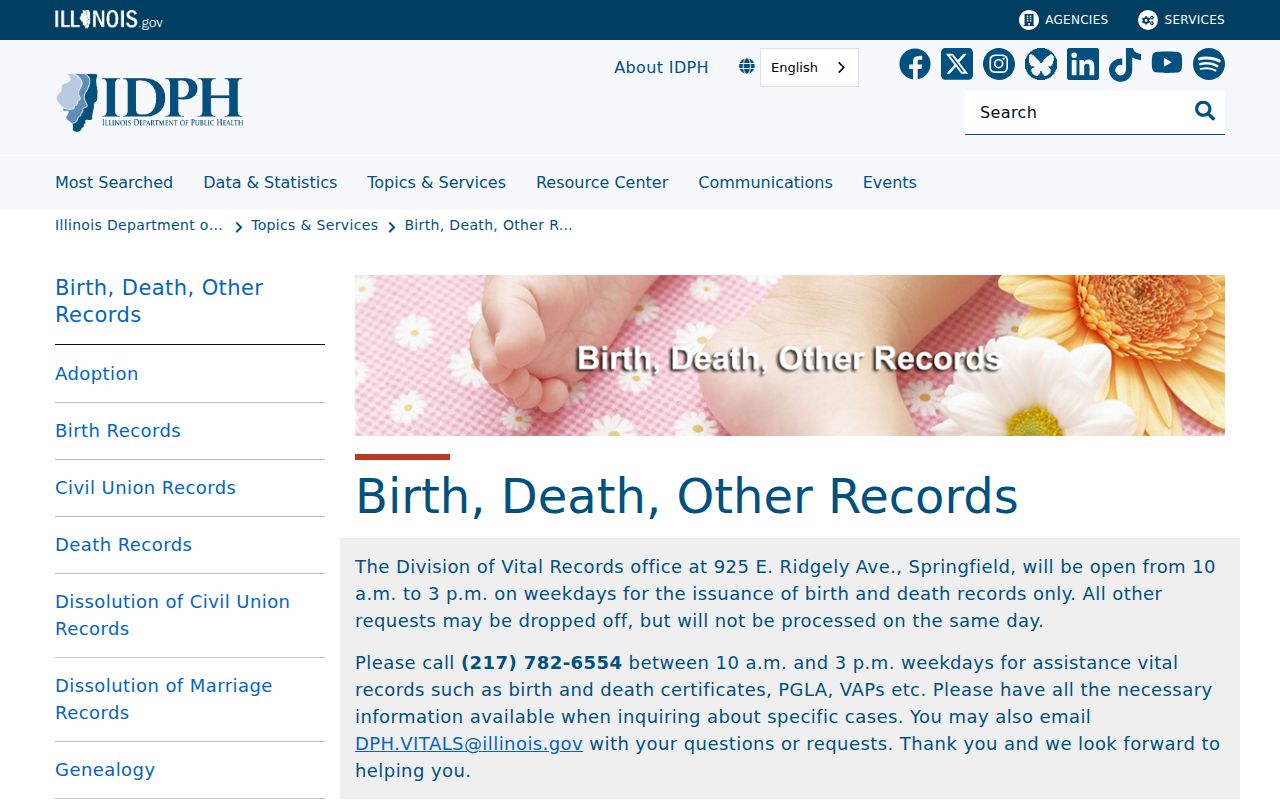
Current birth, death, marriage, and dissolution records are not open resident lists. The Will County Clerk, County Health Department, and Illinois Department of Public Health require the identity, relationship, or property-right basis stated for each record type. Applications are available by the documented mail and in-person channels, with approved ordering services where listed. Older eligible records may shift to the State Archives, IRAD, or genealogy repositories.
The Illinois vital-records access page separates the available certificates and their rules.
Historical Frankfort Directory Shelves
Frankfort Public Library identifies a 1924 telephone directory as its earliest local telephone book. A separate finding aid points to a 1902 Frankfort city directory, though the underlying subscription image was not captured and the complete edition run remains unverified. The library provides its archives for in-house viewing, including cemetery files, township maps, aerial photographs, scrapbooks, newsletters, and local histories. The Frankfort Area Historical Society adds family histories, census materials, plats, school and funeral records, photographs, newspapers, oral interviews, and histories of homes and businesses.
A directory entry proves only that a name was listed at an address in that edition. Pair it with a census, deed, obituary, map, or later directory. The full collection method belongs on the Frankfort city directory page.
Railroad Shaped Frankfort Records
Frankfort's local chronology gives useful context for old names and places. William Rice arrived in 1828 and is described as the first white settler in 1831. Chelsea was established in 1848 in what is now downtown. The railroad brought the name Frankfort Station, the town was founded in 1855, and incorporation followed in August 1879. These changes can explain why a person or place appears under a township, station, town, or village label.
Use dates as search pivots, not decoration. An early plat may describe a block and lot before a modern street address existed. A newspaper may use Frankfort Station. Later zoning, parcel, and municipal records use more precise jurisdiction and PIN systems. The name printed by the source should be retained alongside the normalized modern place.
Request Missing Frankfort Records
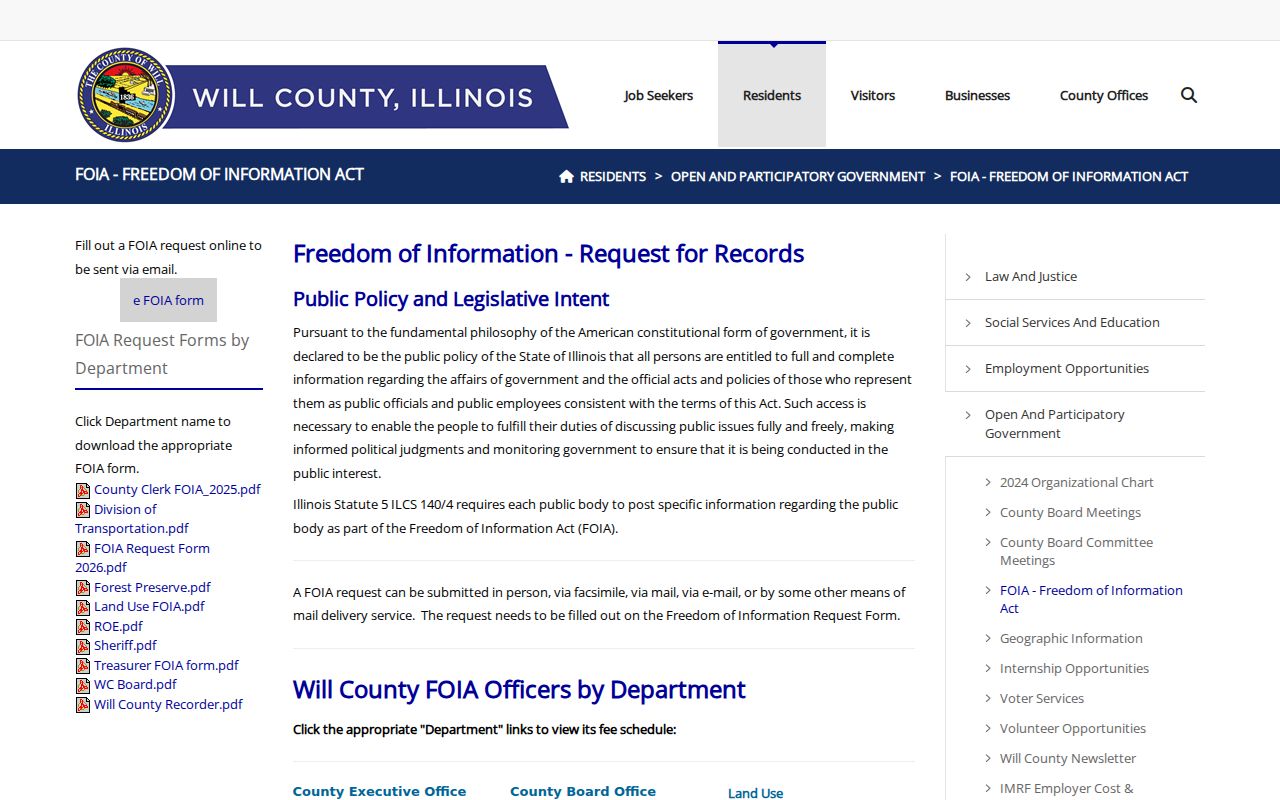
Illinois FOIA allows written or oral requests for identifiable public records, subject to exemptions. Will County links department-specific forms for the Recorder, Supervisor of Assessments, Sheriff, Clerk, Treasurer, and Land Use offices. The Village has its own form, and Frankfort Township maintains a separate FOIA route. Send the request to the office that created or keeps the record.
A narrow request works best. State the address or name, record type, department, and date range. Ask for inspection when a large file may be costly, and request an electronic copy when suitable. If a record is denied or redacted, read the cited basis and use the Illinois Attorney General Public Access Counselor process when appropriate.
The Will County FOIA page collects the county channels.
Use Frankfort Records Lawfully
Public access does not make every fact suitable for republication. Illinois FOIA contains privacy and exemption provisions. The Election Code restricts voter data uses. The Address Confidentiality Program can provide a substitute address for eligible people, though it does not automatically erase older public land records. Recorder redaction requests cover specified personal identifiers in identified documents.
Lawful use. Use Frankfort records for lawful personal research, and never use an address or name to stalk, harass, threaten, or harm anyone.
Keep a source date, URL, query, record number, named role, and access warning with every result. Return corrections to the custodian that owns the source. Dynamic systems change, so a saved result should never be presented as current without a fresh check.